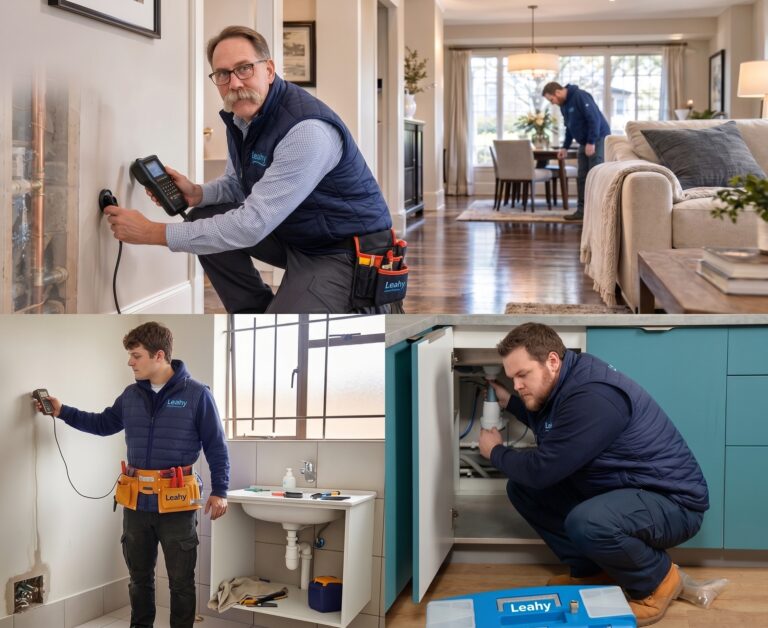
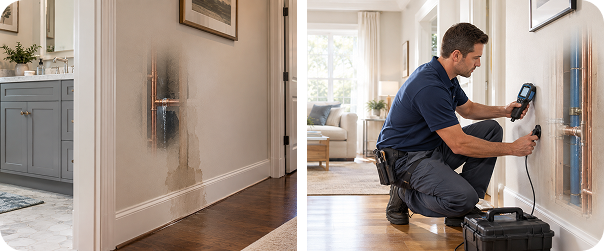
Leak Detection
& Leak Repair in Montgomery
County, MD
A plumbing leak is not always as obvious as water pooling under a sink. You may notice a higher water bill, a damp spot on a wall or ceiling, or the sound of running water when no fixtures are in use.
Leahy Plumbing & Heating provides leak detection and leak repair in Montgomery County, MD for hidden and visible plumbing leaks. We locate the source of the problem, explain what is causing it, and recommend the appropriate repair for your home.
For professional leak detection and repair in Montgomery County, call Leahy Plumbing & Heating at (301) 652-0478.
Signs You May Have a Hidden Water Leak
A hidden plumbing leak can continue for some time before you see water directly. Instead, the first clues may be changes around your home—a higher utility bill, a damp area that does not dry, or the sound of water when everything is turned off. Knowing what to watch for can help you recognize when professional leak detection is appropriate.
Quick Answer:
How Do I Know If I Have a Hidden Water Leak?
Hidden leaks often reveal themselves through higher-than-normal water bills, damp walls or flooring, mold growth, musty odors, reduced water pressure, or the sound of running water when no fixtures are in use. Early detection can help prevent costly structural damage and water waste.
Unexpected Increase in Your Water Bill
If your household water use has not changed but the bill suddenly increases, water may be escaping somewhere in the plumbing system.
Damp or Soft Flooring
Flooring that feels damp, warped, loose, or unusually soft may be absorbing water from a leaking pipe or plumbing connection underneath.
Musty Odors
A lingering musty smell can be another clue that moisture is collecting somewhere you cannot easily see, such as behind a wall or beneath flooring.
Running Water Sounds When Fixtures Are Off
Hearing dripping, hissing, or running water when faucets and water-using appliances are off may indicate water moving through the plumbing unexpectedly.
Cracks in Foundation or Walls
Cracks can develop for many reasons, but ongoing water intrusion around a foundation can contribute to structural changes. Unexplained cracking combined with other leak symptoms deserves closer attention.
Water Stains on Walls or Ceilings
Yellow, brown, or expanding stains can indicate moisture behind drywall or above a ceiling. The visible stain may not be directly below the source of the leak.
Mold or Mildew Growth
Persistent moisture creates conditions where mold and mildew can develop. Growth that appears without an obvious source of moisture may warrant a plumbing inspection.
Low Water Pressure
A noticeable drop in water pressure can have several causes, including a plumbing leak. If the change occurs suddenly or affects multiple fixtures, the system should be evaluated.
Wet Spots in Your Yard
Persistently soggy areas, unusually green patches of grass, or standing water during otherwise dry weather can sometimes point to a leaking underground water line.
Plumber’s Tip:
One sign by itself does not always confirm a hidden leak. Look for changes from what is normal for your home. A combination of higher water use, unexplained moisture, or running-water sounds provides a stronger reason to have the plumbing checked.
If you suspect a hidden leak in your Montgomery County home, professional leak detection can help locate the source before deciding what repair is needed.
A plumbing leak can develop almost anywhere water travels through your home. Some leaks are easy to spot around a fixture, while others remain hidden behind walls, beneath floors, or underground. Finding the location and understanding what failed are the first steps toward making the right repair.
Pipe Leaks
Supply and drain pipes can leak because of corrosion, damaged fittings, loose connections, or deterioration over time. Depending on the location and condition of the pipe, the damaged section may be repaired or replaced.
Slab Leaks
A slab leak occurs in plumbing beneath a concrete foundation or floor. Warning signs can include unexplained water use, warm or damp flooring, or the sound of running water without an obvious source.
Ceiling Leaks
Water stains or dripping from a ceiling may originate from plumbing on the floor above. Because water can travel before becoming visible, the source may not be directly over the damaged area.
Wall Leaks
Pipes and plumbing connections hidden inside walls can leak without immediately producing visible water. Discoloration, peeling paint, soft drywall, or musty odors may be early clues.
Underground Water Line Leaks
A damaged underground water line can waste a significant amount of water before the problem becomes obvious. Wet areas in the yard, reduced pressure, or an unexplained increase in water usage can point to a buried leak.
Fixture Leaks
Faucets, shower valves, supply lines, and other fixtures can develop leaks at seals, connections, or internal components. Locating the exact failure helps determine whether the fixture can be repaired.
Toilet Leaks
Toilets can lose water through internal tank components, seals, or plumbing connections. Some leaks are visible around the base, while others quietly send water into the bowl and increase household water use.
Water Heater Leaks
Water around a water heater may come from a valve, fitting, plumbing connection, or the tank itself. External leaks may be repairable, but a corroded tank that is leaking generally requires water heater replacement.
Outdoor Plumbing Leaks
Hose bibs, exterior supply lines, irrigation connections, and other outdoor plumbing can also develop leaks. These problems may show up as dripping fixtures, soggy ground, or unexpected water consumption.
Plumber's Tip:
The place where you see water is not always where the leak started. Water can move along pipes, framing, or other surfaces before becoming visible, which is why locating the source matters.
Leahy Plumbing & Heating provides leak detection and leak repair for Montgomery County homeowners, with a focus on finding the problem first and recommending the appropriate repair.
When water appears where it should not, the source is not always obvious. A stain on the ceiling may come from plumbing several feet away, and a higher water bill can indicate a leak you cannot see at all. Our leak detection process focuses on narrowing down the source before recommending a repair, helping avoid unnecessary disruption to your home.
Quick Answer:
How Do Professional Plumbers Detect Hidden Leaks?
Professional plumbers use specialized equipment such as acoustic listening devices, moisture meters, thermal imaging, and pressure testing to locate hidden leaks with minimal disruption to your home. This allows repairs to be targeted without unnecessary demolition.
Plumber’s Tip:
Tell your plumber when you first noticed the problem and whether it has changed. Details such as when a stain appeared, whether your water bill increased, or when you hear running water can help narrow down a hidden leak.
For professional leak detection and leak repair in Montgomery County, call Leahy Plumbing & Heating at:
We begin by reviewing the signs you have noticed and inspecting the plumbing in the affected area. Depending on the situation, leak detection may involve checking fixtures and connections, measuring moisture, listening for water movement, using thermal imaging, or testing sections of the plumbing system.
The goal is to narrow down where water is escaping before opening walls, ceilings, or flooring.
Assess the Damage
Once the leak is located, we evaluate the affected plumbing and surrounding area. We look at what failed, how accessible the problem is, and whether corrosion or deterioration extends beyond one small section.
This helps determine the scope of the plumbing repair rather than addressing only the visible water.
Explain Your Repair Options
After identifying the problem, we explain what we found and how it can reasonably be corrected. The appropriate solution may involve repairing a connection, replacing a damaged fitting, or removing and replacing a section of pipe.
If the condition of the surrounding plumbing affects the recommendation, we will explain that as well.
Complete the Repair
Once the solution is clear, we repair the source of the leak. The work depends on where the problem is located and what caused it, with the goal of limiting access to the area necessary to complete the plumbing repair properly.
Verify the Leak Has Been Resolved
After the repair, we check the affected plumbing to confirm that water is no longer escaping. Depending on the type of leak, this may include running fixtures, inspecting connections, checking for moisture, or verifying pressure.
Why Hidden Leaks Should Never Be Ignored
A small plumbing leak may not seem like a serious problem when there is no visible flooding. But water that continues escaping behind a wall, beneath flooring, or near the foundation can gradually affect materials throughout the home. Finding and repairing the source early can help limit water waste and prevent damage from spreading.
Plumber’s Tip:
The visible water damage may be some distance from the source of a leak. Note when stains, damp spots, or running-water sounds first appeared, and have the plumbing checked before opening walls or replacing damaged finishes. Locating and repairing the source helps prevent the same damage from returning.
Quick Answer:
Can a Small Leak Really Cause Major Damage?
Yes. Even a slow leak can lead to mold growth, wood rot, drywall damage, flooring deterioration, and increased water bills over time. Addressing leaks early often prevents significantly more expensive repairs later.
Structural Damage
Water can weaken building materials when they remain damp for extended periods. Framing, subfloors, and other structural materials may deteriorate if a hidden leak continues without being repaired.
Mold Growth
Persistent moisture creates an environment where mold and mildew can develop. A leak concealed behind drywall or beneath flooring may provide moisture even when the surrounding area looks dry.
Higher Utility Bills
A hidden leak can waste water around the clock. Even if the amount escaping seems small at any given moment, that continuous loss can show up as an unexplained increase in your water bill.
Foundation Damage
Underground plumbing leaks can introduce excess water around or beneath a home’s foundation. Over time, changing soil and moisture conditions may contribute to foundation-related problems that require further evaluation.
Wood Rot
Wood framing, subflooring, cabinets, and other materials can deteriorate after prolonged exposure to moisture. Because much of this wood is concealed, damage may develop before it becomes obvious from inside the room.
Damage to Flooring and Drywall
Drywall and many flooring materials absorb moisture readily. A leak can lead to staining, bubbling paint, soft drywall, warped flooring, loose materials, or other visible changes around the affected area.
If you suspect a hidden leak in your Montgomery County home, professional leak detection can help locate the source before deciding what repair is needed.
When you have a plumbing leak, you want the source found accurately and the repair explained clearly. Leahy Plumbing & Heating has served local homeowners for nearly 100 years, bringing practical plumbing experience to every Montgomery County service call.
Homeowners choose us for:
Careful leak detection
We work to locate the source before recommending a repair.
Straightforward answers
We explain what we find and what your options are.
Practical repairs
Recommendations are based on the condition of your plumbing.
Professional service
We treat your home and plumbing with care.
For leak detection and repair in Montgomery County.
Not every plumbing leak can be prevented, but regular attention to your system can reduce the chances of an unexpected problem. Small leaks, excessive water pressure, freezing temperatures, and aging components can all put plumbing at risk. Knowing what to watch for can help Montgomery County homeowners address problems before they lead to more extensive water damage.
Quick Answer:
Should I Shut Off My Water If I Suspect a Leak?
If you notice significant leaking, rapidly increasing water, or water damaging your home, shutting off your home’s main water supply can help minimize damage until a plumber arrives.
Schedule Routine Plumbing Inspections
Many plumbing problems develop gradually. An inspection can identify corrosion, deteriorating connections, worn valves, and other concerns that may not yet be causing obvious symptoms.
Why it matters
Finding vulnerable components early gives you an opportunity to address them before they begin leaking.
What to watch
Pay particular attention to plumbing that is older or has a history of repairs.
Monitor Water Pressure
Excessive water pressure can place unnecessary strain on pipes, fittings, supply lines, valves, and fixtures.
What to consider
Consistently high pressure may contribute to premature wear and increase the likelihood of leaks.
Watch for changes
Banging pipes or noticeable changes in pressure can be reasons to have the system evaluated.
Replace Aging Plumbing Components
Plumbing materials and connections do not last indefinitely. Supply lines, shutoff valves, fittings, and older sections of pipe can become more vulnerable as they age.
Practical approach
Replacement does not necessarily mean updating your entire plumbing system. Addressing worn components as they are identified can help reduce future problems.
Address Small Leaks Early
A slow drip under a sink or occasional moisture around a fixture can be easy to put off. Small leaks, however, may worsen or allow moisture to affect nearby cabinets, flooring, or walls.
Why it matters
Repairing the source early can limit water waste and prevent the affected area from staying damp.
Protect Pipes During Freezing Weather
Montgomery County winters can bring temperatures low enough to put exposed or poorly protected plumbing at risk. Water expands when it freezes, which can place considerable pressure on pipes.
What to consider
Plumbing in garages, crawl spaces, exterior walls, and other colder areas may need additional attention before freezing weather arrives.
If a pipe freezes
Avoid using an open flame or other unsafe heating methods.
Plumber’s Tip:
Know where your home’s main water shutoff is before you need it. If a significant leak occurs, being able to stop the water quickly can help limit damage while you arrange professional service.
For plumbing leak repair in Montgomery County, call Leahy Plumbing & Heating at
Leahy Plumbing & Heating provides leak detection and repair for homeowners in Rockville, Bethesda, Chevy Chase, Gaithersburg, Potomac, North Bethesda, Kensington, and Wheaton. Whether you notice a water-bill increase, damp drywall, or water around a fixture, we focus on identifying the source and explaining the repair your home needs. In older homes, aging pipes and connections may warrant closer inspection when unexplained moisture appears.
Hidden leaks can be difficult to understand because the place where you notice water is not always where the problem started. Here are clear answers to common questions Montgomery County homeowners have about leak detection and repair.
How Do I Know If I Have a Hidden Water Leak?
Watch for unexplained increases in your water bill, damp walls or floors, musty odors, water stains, reduced pressure, or running-water sounds when fixtures are off.
How Do Plumbers Detect Hidden Leaks?
Plumbers may use moisture meters, acoustic equipment, thermal imaging, pressure testing, and other methods to narrow down where water is escaping without opening unnecessary areas of the home.
Can a Water Leak Increase My Water Bill?
Yes. A leak that continuously loses water can increase household usage even when your normal habits have not changed. An unexpected bill increase can be an early warning sign.
Is Leak Detection Destructive?
Professional leak detection is designed to locate problems with as little disruption as practical. Specialized equipment can often narrow down the source before access through a wall, ceiling, or floor is needed.
How Much Does Leak Detection Cost?
Cost varies based on the location and complexity of the problem and the methods required to find it. An evaluation can determine what type of leak detection is appropriate.
Can You Repair Leaks Inside Walls?
Yes. Once the source is identified, the affected plumbing can often be accessed and repaired. The amount of access needed depends on the leak’s location.
What Is a Slab Leak?
A slab leak is a plumbing leak beneath a concrete slab or foundation. Signs may include unexplained water usage, damp or warm flooring, or running-water sounds.
Can a Small Leak Cause Mold?
Yes. Even a slow leak can provide enough ongoing moisture for mold or mildew to develop, particularly in enclosed areas that do not dry easily.
Should I Shut Off My Water If I Suspect a Leak?
For significant or rapidly spreading leaks, shutting off the main water supply can help limit additional damage until a plumber arrives.
How Long Does Leak Detection Take?
Timing depends on where the leak is located and how difficult it is to isolate. Some sources are found quickly, while concealed or underground leaks may require additional testing.
Do You Repair the Leak After Finding It?
Yes. Leahy Plumbing & Heating provides both leak detection and plumbing repair. Once we locate the problem, we explain the repair options and what the work involves.
Do You Offer Same-Day Leak Repair?
Same-day availability depends on the service schedule, leak location, and repair required. Call Leahy Plumbing & Heating at (301) 652-0478 to ask about current availability in Montgomery County.
Schedule Leak Detection & Repair in Montgomery County Today
If you suspect a hidden or visible plumbing leak in your Montgomery County home, call Leahy Plumbing & Heating at (301) 652-0478. We’ll locate the source, explain your repair options, and recommend the appropriate next step. Call to ask about current availability.